 Skip to content
speech coach
A speech coach that works on one habit at a time — and checks real conversations
How the speech coach in Kyndsy works: one skill a week, a short spoken exercise every day, and credit given not for taps but for what changed in real conversations.
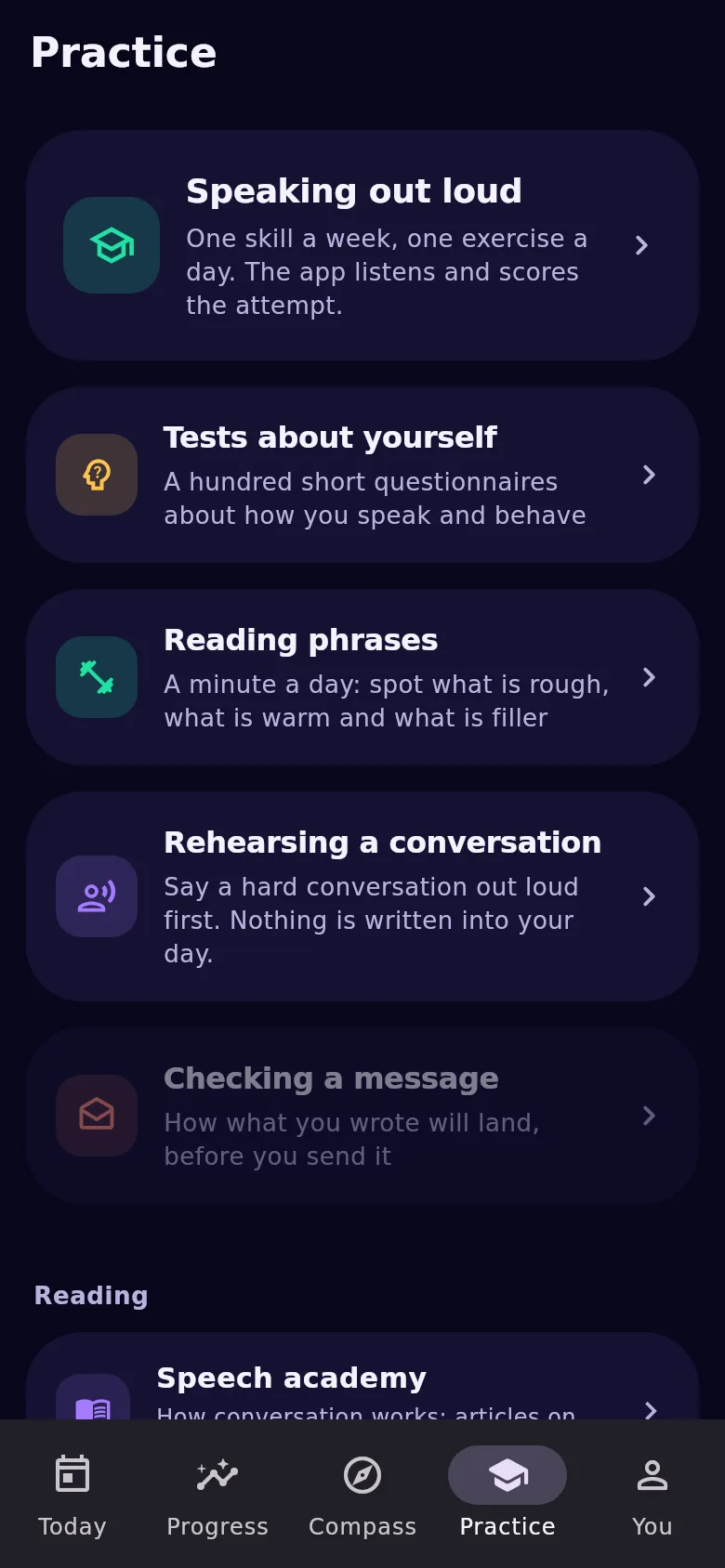
An app that only counts eventually gets boring: you know the numbers, but not what to do with them. The coach answers the second question. It takes one habit, gives a short spoken exercise every day, and checks the result where it matters — in ordinary conversations.
One habit, not a list of ten
A list of “ten things to fix in your speech” reads like a verdict and gets closed on day three. So there is always one skill: do not interrupt, a pause instead of “um”, shorter sentences, speak about yourself, support instead of throat.
The first skill is chosen neither by you nor by alphabet, but by your own numbers: the app looks at where things are worst — interruptions per hour, fillers per hundred words, words per sentence — and starts there.
The exercise is spoken, and it does not spoil your statistics
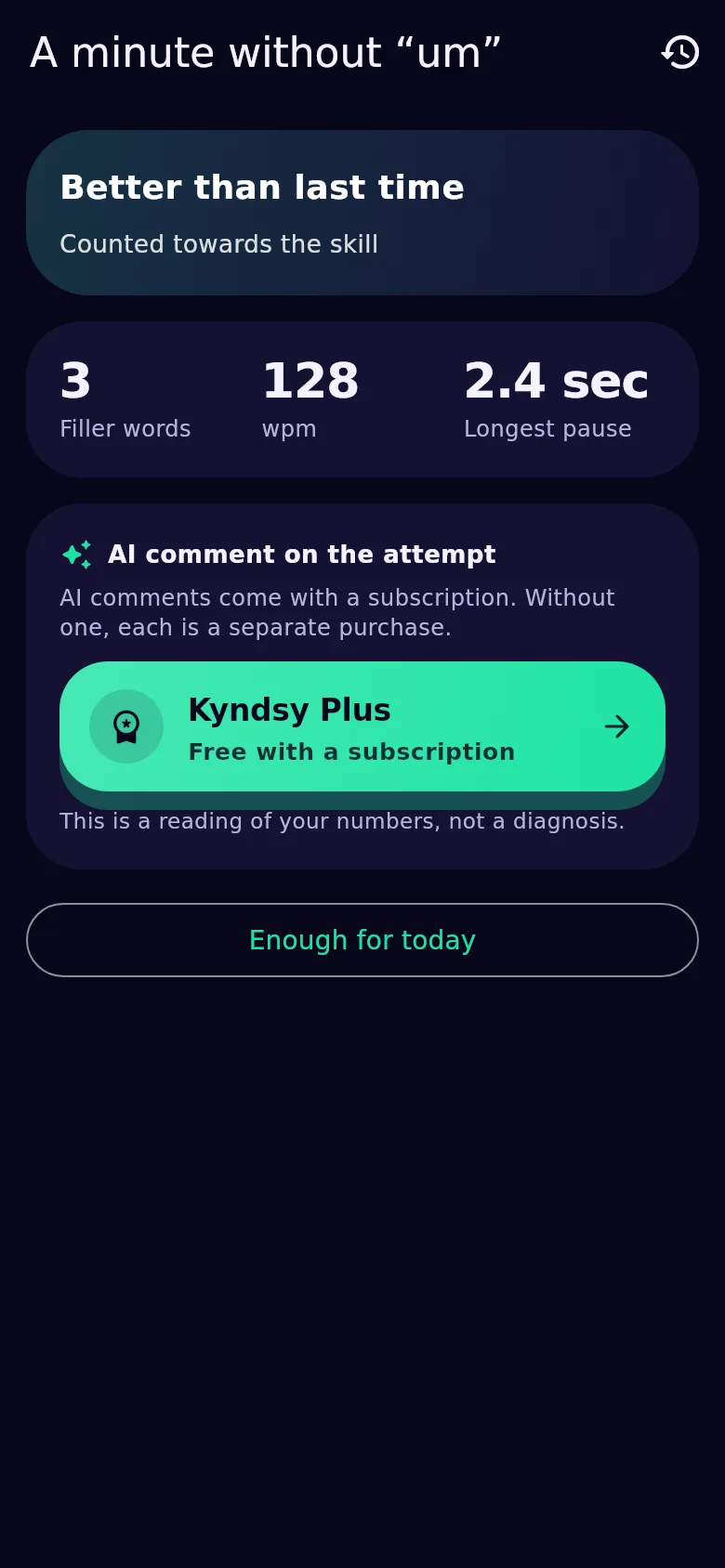
Every day there is one short task: a minute without “um”, a breath before answering, one thought per sentence, hold a sound. The app listens and counts during the attempt: fillers, pace, longest pause.
One detail that is easy to get wrong: the exercise is not written into your day. It runs through the same sink as a rehearsal. Otherwise training itself would raise the harshness counter — the very number the person is training to lower.
Credit comes from real speech, not from taps
A skill day counts once, no matter how many attempts you make: a habit is repetition day after day, not volume in one evening. But seven counted days on their own still mean nothing.
A skill is learned only when real conversations changed — this week’s number against the number at the start. If the days are done and conversations look the same, the app says so plainly and extends the skill. That is less pleasant than congratulations, and more honest.
What the attempt review shows
After each attempt: numbers — how many fillers, what pace, the longest pause; for voice exercises, how long the sound held and how steady it was. And one piece of advice, not a list: the thing that limits you most.
Subscribers get an AI review that compares this attempt with earlier ones and says what to do in the next one. It is built on the numbers of your attempt rather than on general phrases — and that shows in the text.
Why this beats “just pay attention to yourself”
“Paying attention” is a task without edges, and attention runs out in a day. One habit for a week with a short daily exercise is a task with a size, and it is visible on a calendar.
More importantly, the result is checked by the same counter as before, not by a feeling. The improvement is either in the numbers or it is not.
One hundred ways to look at yourself
Reading about it is one thing. Ten of the tests are open right here — no install, no account, nothing saved.