 Skip to content
filler words
Word of the week: one filler word instead of a list of ten
Lists of “ten words that ruin your speech” do not work — attention lasts about a day. One word, chosen from your own most frequent ones, with a counter next to it, does.
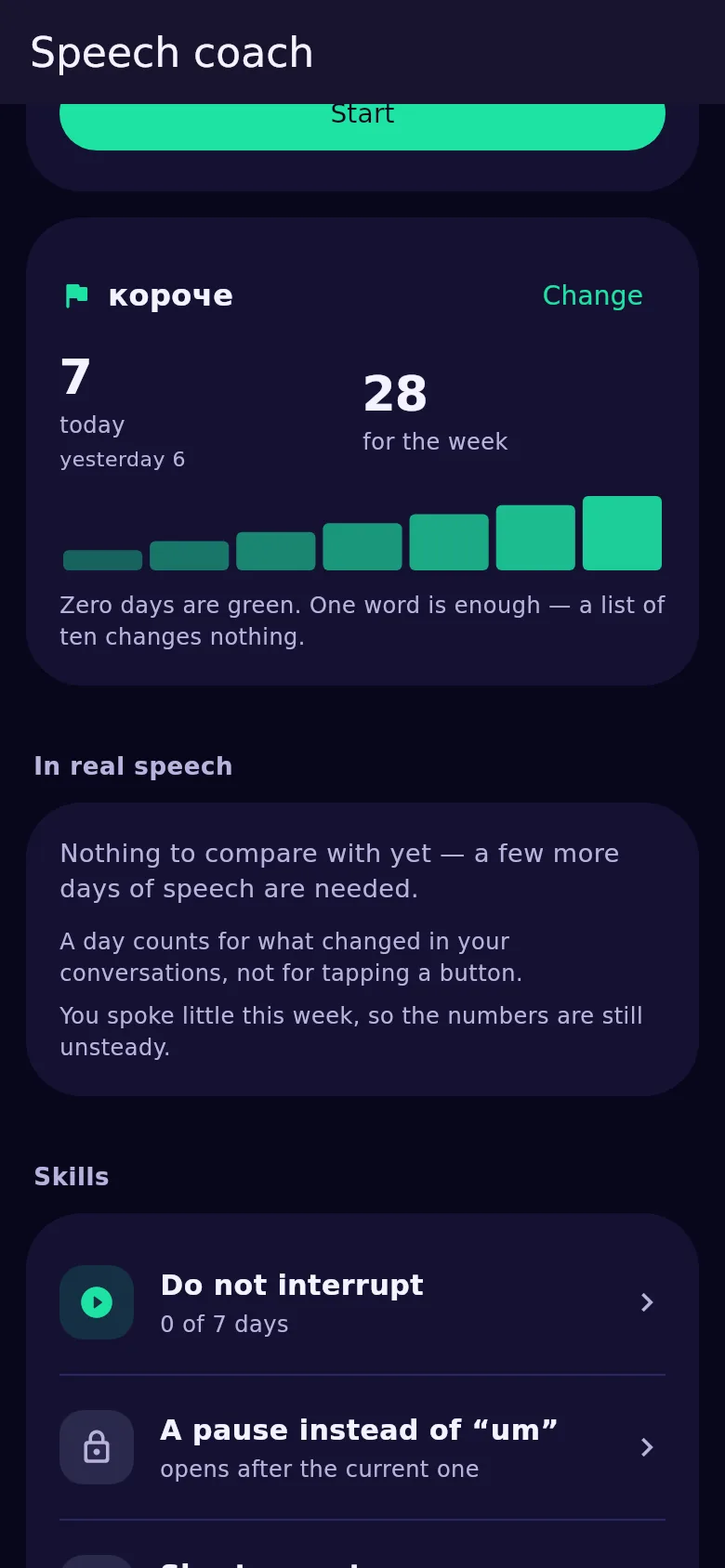
“Get rid of your filler words” is advice with nothing underneath it: a person has dozens of them, and watching all of them at once is impossible. Attention stretches to exactly one. So the app has a word of the week: one word, its count by day, and nothing else.
Why one word and not a list
A list of ten reads like a verdict and gets closed on the third day. One word fits in your head whole: you remember it mid-conversation instead of recalling a list.
And only one word gives an honest count. Watch ten and “it got better” cannot be checked: one went down, another went up, and the sum shows nothing.
You pick the word — and only from your own
The app does not offer a generic list of fillers. It shows your most frequent ones from the past month — the ones you actually say — and you choose among them.
Dropping a word you never use is pointless: that is an exercise in attention, not in speech. If there are not enough frequent words yet, the card simply does not appear — an empty choice is worse than no choice.
What the counter shows
Three numbers: today, yesterday and the week, plus bars by day. Zero days are green — the only praise given here, and it is given for a fact, not for effort.
The count comes from the same events as everything else: the word is caught in ordinary speech during a session, not in a special exercise. There is no separate “now I am watching my word” mode — otherwise you would only watch during those minutes.
You can change the word, and that is not a defeat
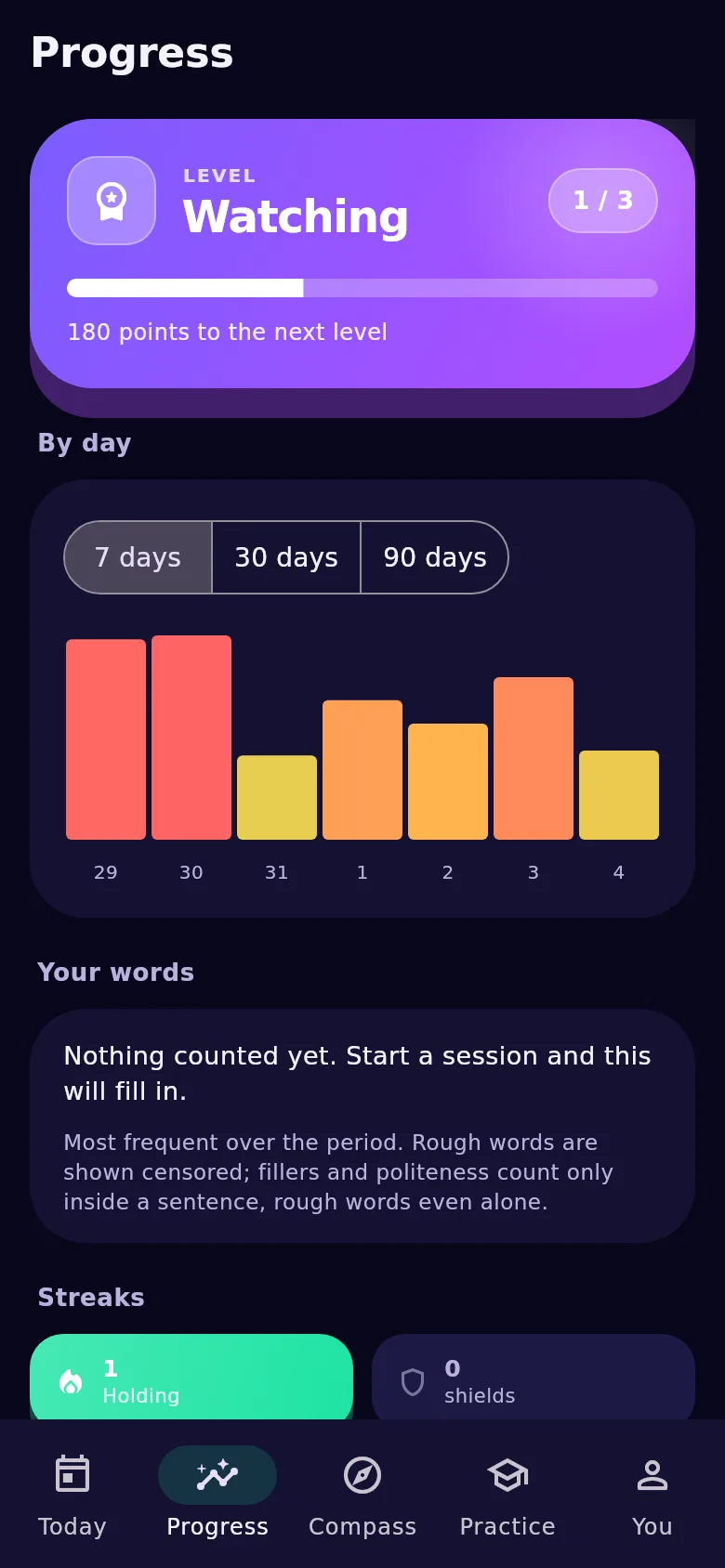
The “change” button sits right next to the word itself. A week is not a commitment: if the word you chose turns out to be rare while another one is in the way, change it now rather than grinding on until Sunday.
The history is not erased: the previous word stays in the event counters and you can come back to it. The app keeps no “list of words you gave up on” — it is not about how many you dropped.
How this differs from “just paying attention”
“Paying attention” is a task with no edges and no end, and attention runs out on the first hard day. One word with a number beside it is a task with a size: you can see it on a calendar and you can see movement in it.
And it is not checked by feeling. By the end of the week you either have fewer of them in real speech or the same number — and both are visible in figures, not in how it seemed.
One hundred ways to look at yourself
Reading about it is one thing. Ten of the tests are open right here — no install, no account, nothing saved.